
• Tech
    • Tech Category
      • Engine
      • Bottom End
      • Rods and Pistons
      • Head and Headwork
      • Cams and Valvetrain
      • Cooling and Heat Management
      • Intake
      • Headers and Exhaust
      • Rotary
      • Engine Management and Tuning
      • Drivetrain
      • Transmission
      • Clutch and Flywheel
      • Differential and Final Drive
      • Driveshaft and Axle
      • Axles
    • Tech Category
      • Suspension
      • Shocks and Coilovers
      • Springs
      • Swaybars
      • Arms and Links
      • Bushings
      • Steering
      • Geometry Correction
      • Suspension Setup and Tuning
      • Brakes
      • Wheels and Tires
      • Fueling
      • Forced Induction and NOS
      • Aerodynamics
    • Tech Cat
      • Electrical
      • Battery and Power Distribution
      • Electronics
      • Wiring
      • Electrical System Education and Troubleshooting
      • Lubrication
      • Interior and Controls
      • Exterior
      • Paint and Bodywork
      • Wraps and Film Protection
      • Exterior Care and Maintenance
      • Data Acquisition and Tuning
      • Fabrication and Safety
      • Tips and How-To
  • Projects
    • Make A-D
      • Acura
      • Integra (DC2)
      • NSX
      • CSF RSX (DC5)
      • BMW
      • E30 (SR20 Powered)
      • E36 323is
      • E36 M3 (Black)
      • E36 M3 (Silver)
      • E39 M5
      • E46 M3
      • E90 M3
      • E46 Racecar
      • Yost Auto E92 M3
      • Yost Auto F82 M4
      • Chevrolet
      • Camaro Gen5
      • Corvette Stingray (C7 Z51)
      • Corvette Stingray (C8 Z51)
      • GMC Canyon
      • Dodge
      • Viper GTS
    • Make E-I
      • Ford
      • E350 Tow Rig
      • F150 EcoBoost
      • Fiesta ST
      • Focus ST
      • Mustang 5.0 (Grey)
      • Mustang 5.0 (White)
      • Mustang S197 (Budget Track Car)
      • Mustang S550 GT
      • Honda
      • Civic EF Racecar
      • Civic Si (Coupe)
      • Civic Si (EP3)
      • Civic Si (Saloon)
      • EJ Civic
      • Polystrand CRX
      • S2000 (AP1)
      • S2000 (AP2)
      • Infiniti
      • G20 Racecar
      • G20 (P10 AWD Turbo)
      • G35
      • G37S
    • Make J-M
      • Isuzu
      • Vehicross
      • Lexus
      • ISF
      • SC300
      • Mazda
      • V8 RX7 (3rd Gen)
      • RX-7 (3rd Gen)
      • RX-7 Restomod (3rd Gen)
      • Skyactiv 3
      • Frankenmiata
      • Miatabusa
      • My Girlfriend’s Miata
      • Mitsubishi
      • EVO VIII
      • EVO IX
      • EVO X
      • CSF EVO X Racecar
      • Professional Awesome EVO VIII
    • Make N-P
      • Nissan
      • 200SX
      • 200SX SE-R
      • 240SX Land Speed Racer
      • 300ZXTT
      • 350Z
      • 350Z Drift Car
      • 370Z
      • GT-R (R33)
      • GT-R (R35)
      • GT-R (Team America BNR32)
      • LS S13
      • NX GTi-R
      • Pathfinder
      • S13 Drift/Grip Do-it-All Mega 240
      • Sentra SE-R
      • Sentra Spec V
      • Silvia
      • STurdteen Drift Car
      • Porsche
      • 991 GT3RS
      • Cayman (987)
      • Cayman T
      • Cayman GTS 4.0
    • Make S-Z
      • Scion
      • FR-S
      • Scion Tuner Challenge FR-S
      • TC
      • Subaru
      • Autocross BRZ
      • Legacy GT
      • STI (gen 2)
      • STI (gen 3)
      • WRX (GD)
      • WRX (VA)
      • Toyota
      • 4Runner
      • AE86 Corolla
      • GR Corolla
      • Starletabusa
      • Supra Mark IV
      • Tacoma
      • Tundra
      • Volkswagen
      • MKIV Jetta TDI
      • MKVI Golf TDI
      • MKVII Golf R
      • Sipster (Rabbit)
    • Other Projects
      • Powersports
      • Aprilia RS50
      • Aprilia SR50
      • Doodlebug
      • Ducati 998
      • Ducati Hypermotard
      • Honda Ruckus
      • Husqvarna TE610
      • Go Karts
      • Other
      • Sim Racer
      • Aurora Cobra
      • Garage
      • NP01 Prototype
  • Features
    • Features
      • Feature Cars
      • Drag Race Cars
      • Drift Cars
      • Land Speed Cars
      • Open-Wheel Cars
      • Rally Cars
      • Road Race Cars
      • Street Cars
      • Time Attack Cars
      • Drag Racing
    • Features
      • Events
      • Drifting
      • Land Speed Racing
      • Open-Wheel Racing
      • Time Attack Racing
      • Rally Racing
      • Road Racing
      • Car Shows
      • Columns
      • SlipAngle Podcast
  • Video
  • Shop *NEW*
  • MotoIQ Garage Services
  • About
  • Shop *NEW*
  • MotoIQ Garage Services
  • About
MotoIQ
MotoIQ
  • Tech
    • Tech Category
      • Engine
      • Bottom End
      • Rods and Pistons
      • Head and Headwork
      • Cams and Valvetrain
      • Cooling and Heat Management
      • Intake
      • Headers and Exhaust
      • Rotary
      • Engine Management and Tuning
      • Drivetrain
      • Transmission
      • Clutch and Flywheel
      • Differential and Final Drive
      • Driveshaft and Axle
      • Axles
    • Tech Category
      • Suspension
      • Shocks and Coilovers
      • Springs
      • Swaybars
      • Arms and Links
      • Bushings
      • Steering
      • Geometry Correction
      • Suspension Setup and Tuning
      • Brakes
      • Wheels and Tires
      • Fueling
      • Forced Induction and NOS
      • Aerodynamics
    • Tech Cat
      • Electrical
      • Battery and Power Distribution
      • Electronics
      • Wiring
      • Electrical System Education and Troubleshooting
      • Lubrication
      • Interior and Controls
      • Exterior
      • Paint and Bodywork
      • Wraps and Film Protection
      • Exterior Care and Maintenance
      • Data Acquisition and Tuning
      • Fabrication and Safety
      • Tips and How-To
  • Projects
    • Make A-D
      • Acura
      • Integra (DC2)
      • NSX
      • CSF RSX (DC5)
      • BMW
      • E30 (SR20 Powered)
      • E36 323is
      • E36 M3 (Black)
      • E36 M3 (Silver)
      • E39 M5
      • E46 M3
      • E90 M3
      • E46 Racecar
      • Yost Auto E92 M3
      • Yost Auto F82 M4
      • Chevrolet
      • Camaro Gen5
      • Corvette Stingray (C7 Z51)
      • Corvette Stingray (C8 Z51)
      • GMC Canyon
      • Dodge
      • Viper GTS
    • Make E-I
      • Ford
      • E350 Tow Rig
      • F150 EcoBoost
      • Fiesta ST
      • Focus ST
      • Mustang 5.0 (Grey)
      • Mustang 5.0 (White)
      • Mustang S197 (Budget Track Car)
      • Mustang S550 GT
      • Honda
      • Civic EF Racecar
      • Civic Si (Coupe)
      • Civic Si (EP3)
      • Civic Si (Saloon)
      • EJ Civic
      • Polystrand CRX
      • S2000 (AP1)
      • S2000 (AP2)
      • Infiniti
      • G20 Racecar
      • G20 (P10 AWD Turbo)
      • G35
      • G37S
    • Make J-M
      • Isuzu
      • Vehicross
      • Lexus
      • ISF
      • SC300
      • Mazda
      • V8 RX7 (3rd Gen)
      • RX-7 (3rd Gen)
      • RX-7 Restomod (3rd Gen)
      • Skyactiv 3
      • Frankenmiata
      • Miatabusa
      • My Girlfriend’s Miata
      • Mitsubishi
      • EVO VIII
      • EVO IX
      • EVO X
      • CSF EVO X Racecar
      • Professional Awesome EVO VIII
    • Make N-P
      • Nissan
      • 200SX
      • 200SX SE-R
      • 240SX Land Speed Racer
      • 300ZXTT
      • 350Z
      • 350Z Drift Car
      • 370Z
      • GT-R (R33)
      • GT-R (R35)
      • GT-R (Team America BNR32)
      • LS S13
      • NX GTi-R
      • Pathfinder
      • S13 Drift/Grip Do-it-All Mega 240
      • Sentra SE-R
      • Sentra Spec V
      • Silvia
      • STurdteen Drift Car
      • Porsche
      • 991 GT3RS
      • Cayman (987)
      • Cayman T
      • Cayman GTS 4.0
    • Make S-Z
      • Scion
      • FR-S
      • Scion Tuner Challenge FR-S
      • TC
      • Subaru
      • Autocross BRZ
      • Legacy GT
      • STI (gen 2)
      • STI (gen 3)
      • WRX (GD)
      • WRX (VA)
      • Toyota
      • 4Runner
      • AE86 Corolla
      • GR Corolla
      • Starletabusa
      • Supra Mark IV
      • Tacoma
      • Tundra
      • Volkswagen
      • MKIV Jetta TDI
      • MKVI Golf TDI
      • MKVII Golf R
      • Sipster (Rabbit)
    • Other Projects
      • Powersports
      • Aprilia RS50
      • Aprilia SR50
      • Doodlebug
      • Ducati 998
      • Ducati Hypermotard
      • Honda Ruckus
      • Husqvarna TE610
      • Go Karts
      • Other
      • Sim Racer
      • Aurora Cobra
      • Garage
      • NP01 Prototype
  • Features
    • Features
      • Feature Cars
      • Drag Race Cars
      • Drift Cars
      • Land Speed Cars
      • Open-Wheel Cars
      • Rally Cars
      • Road Race Cars
      • Street Cars
      • Time Attack Cars
      • Drag Racing
    • Features
      • Events
      • Drifting
      • Land Speed Racing
      • Open-Wheel Racing
      • Time Attack Racing
      • Rally Racing
      • Road Racing
      • Car Shows
      • Columns
      • SlipAngle Podcast
  • Video
  • Tech
  • Mustang 5.0 (Grey)
  • Projects
  • Ford

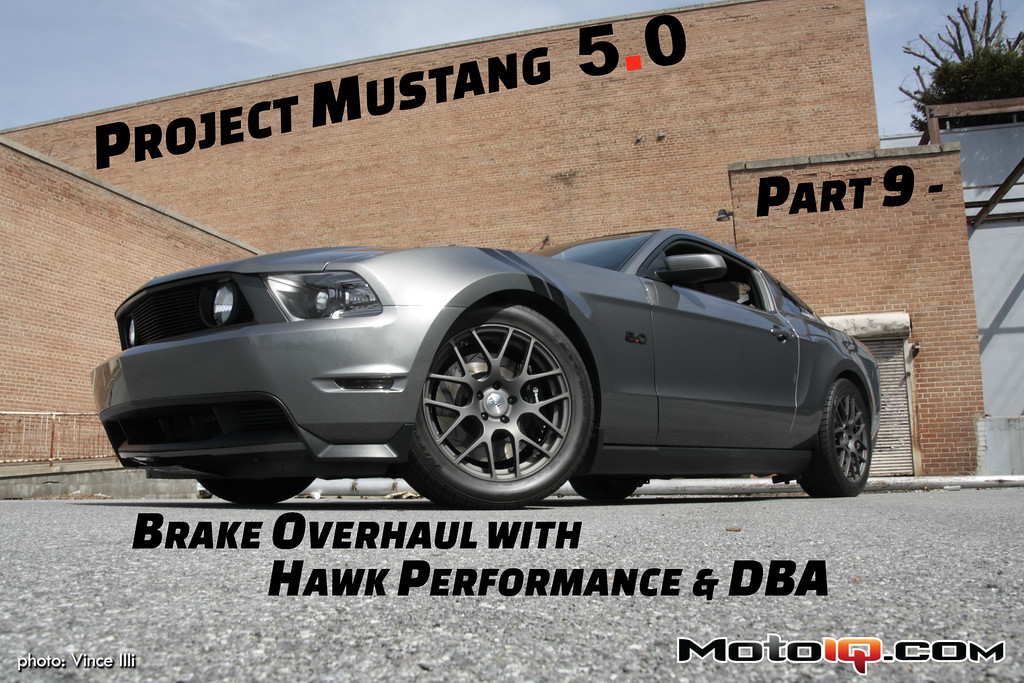
Project Mustang 5.0: Part 9 – Brake Overhaul with Hawk Performance and Disc Brakes Australia

  • VinceIlli

Project Mustang 5.0: Part 9 – Brake Overhaul with Hawk Performance and Disc Brakes Australia

by Vince Illi

The right pedal.  It’s so much fun.  When you push it to the floor, you’re rewarded with loud noises and acceleration.  But unless you’re only living your life a quarter mile at a time, the pedal next to it is just as important, and maybe even more so.  When you’re hot lapping Road Atlanta or dodging cones in a parking lot, you rely on your brakes to bleed speed and set you up for the perfect apex.  (Or if you’re lapping Summit Point, you rely on those brakes to avoid hitting a deer that’s wandered onto the main straight.)  But how do brakes actually work?

The Basics

When you press the brake pedal, you’re really pressing a lever that presses against a piston in the brake master cylinder.  That piston presses against the brake fluid (which is really just a type of hydraulic fluid), which pressurizes the brake lines and, in turn, exerts a force on pistons in the brake calipers.  Those pistons press the brake pads against the brake rotor (or disc).  This clamping force slows the rotor down, which stops the car.  I am of course talking about disc brakes here, because Project Mustang is not equipped with drum brakes, and I’m convinced that no one actually understands how drum brakes work anyway.

Read more about Project Mustang 5.0 Here!


These are the “Stock GT” 2-piston sliding caliper brakes that we replaced back in Part 4.

Project Grey Mustang: Part 4 – Improving Drivability and Reliability

Now, let’s talk a bit about energy.  Thermodynamics tells us that energy can neither be created or destroyed, merely transformed from one form to another.  When your car is moving, it possesses kinetic energy, which is measured in Joules.  In order to stop the car, we need to safely transform that kinetic energy into another form of energy so that the car can slow down and stop.  The formula for kinetic energy is straightforward:

k = 1/2 m v2

That formula simply states that the kinetic energy that something possesses is one half of the mass multiplied by the square of the velocity.  As an example, let’s consider Project Mustang traveling at 55 mph.  With your author in it, Project Mustang weighs about 3,800 pounds.  Converting that into mass and the metric system (the language of SCIENCE!) gives us roughly 1,700 kilograms.  55 mph is roughly 25 meters per second.  So, plugging those two values into the formula gives us:

k = (1/2)(1 700)(25)2 = 531,250 J

530 kilojoules is a lot of energy.  That energy has to be turned into a different form in order to stop the car.  Brakes use friction between the pads and rotors to turn the vast majority of a car’s speed into heat. 


The Problem with Heat


These are the brakes off of a BMW M3 ALMS race car that I took back at the Baltimore Grand Prix in 2011.  See how big the rotors are?  Also note the thickness of the brake pad (the blue thing between the caliper and rotor).

So we’ve got a ton of heat that needs to be dissipated from converting half a megajoule of kinetic energy into heat when we stopped Project Mustang.  We don’t want that heat to go into the brake fluid.  If the brake fluid gets too hot, it will boil.  Boiled brake fluid is now a gas instead of a liquid.  Since gasses are compressible whereas liquids aren’t, boiled brake fluid will cause a “spongy”-feeling brake pedal at best and transfer zero of the force of the brake pedal to the calipers at worst.

The brake pads act as an insulator to the brake fluid.  This is why race cars have such thick brake pads, and why they are swapped out when it looks like half of their usable thickness still remains.  Race car engineers know that a thinner pad means less insulating material between the hot brake components and the fragile brake fluid.

So we need something to remove the heat from the system.  The brake disc does exactly that: it acts as a heat sink.  Brake discs are usually made of iron, which is a good conductor of heat.  (Some race cars today have brake discs made of a special carbon material, but the principle is still the same.)  Contrary to popular belief, the advantage of a “big brake kit” is not increased stopping power, though the added distance between the center of the brake pad and wheel hub does provide some increase in applied brake torque.  The true advantage of larger brake discs is increased thermal mass (for conducting the heat) and increased surface area (for dissipating the heat).
1 2 3 4 5 6Next page
Previous Article
  • Fiesta ST
  • Tech
  • Projects

Project Ford Fiesta ST- Making the Jump to a Race Car with SPD Motorsports Part 2!

  • Mike Kojima
View Post
Next Article
  • Features
  • Powersports

Nerd’s Eye View: Erik Buell Racing 1190RX

  • Khiem Dinh
View Post

Leave a Reply Cancel reply

Your email address will not be published. Required fields are marked *

MotoIQ Proudly Presents Our Partners:

Input your search keywords and press Enter.