I have done a ton of modifications to the car so far, but none have been targeted at reducing weight. The AP Racing brakes setup should have shaved some weight, but the goal for those was to improve braking performance. I actually added weight with a number of modifications: the center radiator (better cooling), the E-Motion Engineering strut tower reinforcement brace (improved chassis response and NVH), and the water injection system (improved engine durability). Now, it’s time to add lightness with an Antigravity battery. I’m going to add some grip and acceleration too with help from Titan7 and Bridgestone.
My first experience with a lithium battery for a vehicle was a Shorai battery for my 2005 Honda CBR600RR. My second OEM Honda battery was dying, with each only having lasted about three years. A buddy told me about Shorai, so I put one in the CBR600RR. It cranked stronger than the OEM battery, was lighter, and it was perfectly good when I sold the bike about ten years later.

Antigravity is well-known in the Porsche world for their lightweight lithium-ion batteries. They have options for extreme weight savings to just big weight savings. Also, they have their RE-START system which jump starts the battery if the battery voltage gets low. Li-ion batteries have a Battery Management System and the BMS in the Antigravity battery will disconnect the battery cells from the vehicle when the voltage gets very low to ensure there is enough juice to start the vehicle one more time. Hit the RE-START button, the battery cells get reconnected to the vehicle, and you’re good to start. Even better, for the Porsche application which is a H6/Group 48 size, the battery has the RE-START system enabled by a key fob.

This is critical because the battery is located in the frunk and you need 12V power to open the frunk unless you want to dig out the manual front release cable hidden in the front fender.
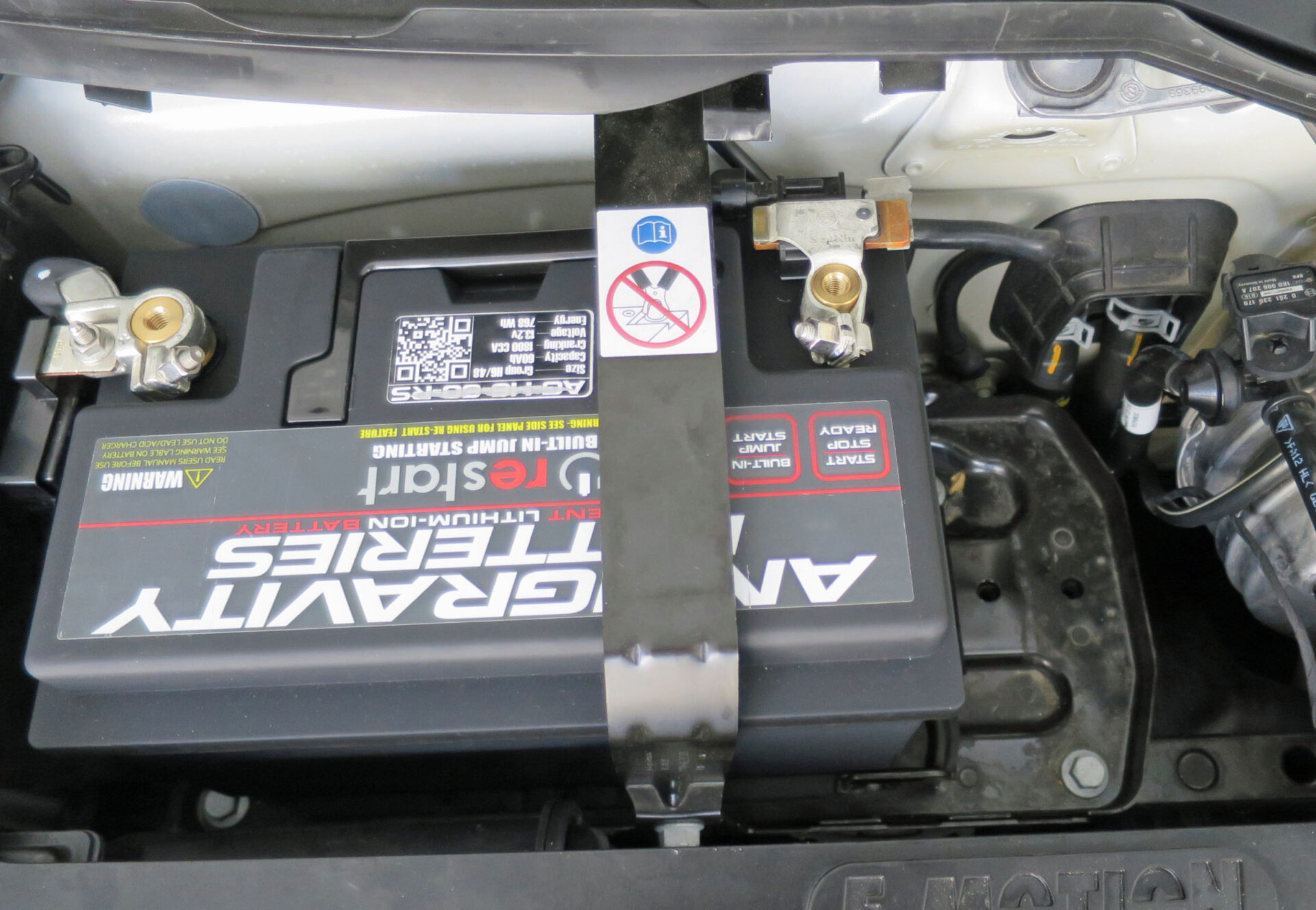
There are three capacity options depending on application with the smaller sizes being lighter; each step up in size is about 5lbs more mass. The 24Ah size is the lightest and only recommended for track cars with minimal electrical demands. The 40Ah battery is recommended for smaller engine cars that are driven frequently. The 60Ah battery is the one I got. Modern cars have lots of electronics that can stay on after the key is removed; the 718 Cayman keeps a couple of the systems on from 5-30 minutes after the key is removed. Plus, modern cars have daytime running lights that are basically always on as soon as you put in the key. I wanted to buffer for when I’m flashing the car too or unable to drive the car for a week or two. I’m content to sacrifice 5lbs of weight savings for extended capacity. You can see the OEM battery is 80Ah capacity, so I’m already reducing the capacity by 25%. Though, the Antigravity battery has higher cranking amps. You can also see that the Antigravity battery is shorter than the OEM battery.

To track the weight and distribution changes, I put the car up on scales in my garage. Note that the garage floor is ever so slightly angled; with the way I had the car setup, the front of the car at the opening of the garage is on the lower side. So, the weight distribution numbers front to rear will be slightly different compared to being on a flat floor. Please excuse the orange tennis ball used to set parking distance; did you know you can buy them with the string and eye hooks all together as a kit?

With the OEM battery, a full tank of gas (minus three miles of driving), washer fluid added, and the water injection reservoir full, the total weight came in at 3122lbs. This is also with three worn out tires and one relatively new tire due to the prior cut tire and wheel incident. Recall the car was nearly 3070lbs completely stock; so, it’s put on some weight in the name of improved thermal performance, chassis stiffness, and engine reliability.