
• Tech
    • Tech Category
      • Engine
      • Bottom End
      • Rods and Pistons
      • Head and Headwork
      • Cams and Valvetrain
      • Cooling and Heat Management
      • Intake
      • Headers and Exhaust
      • Rotary
      • Engine Management and Tuning
      • Drivetrain
      • Transmission
      • Clutch and Flywheel
      • Differential and Final Drive
      • Driveshaft and Axle
      • Axles
    • Tech Category
      • Suspension
      • Shocks and Coilovers
      • Springs
      • Swaybars
      • Arms and Links
      • Bushings
      • Steering
      • Geometry Correction
      • Suspension Setup and Tuning
      • Brakes
      • Wheels and Tires
      • Fueling
      • Forced Induction and NOS
      • Aerodynamics
    • Tech Cat
      • Electrical
      • Battery and Power Distribution
      • Electronics
      • Wiring
      • Electrical System Education and Troubleshooting
      • Lubrication
      • Interior and Controls
      • Exterior
      • Paint and Bodywork
      • Wraps and Film Protection
      • Exterior Care and Maintenance
      • Data Acquisition and Tuning
      • Fabrication and Safety
      • Tips and How-To
  • Projects
    • Make A-D
      • Acura
      • Integra (DC2)
      • NSX
      • CSF RSX (DC5)
      • BMW
      • E30 (SR20 Powered)
      • E36 323is
      • E36 M3 (Black)
      • E36 M3 (Silver)
      • E39 M5
      • E46 M3
      • E90 M3
      • E46 Racecar
      • Yost Auto E92 M3
      • Yost Auto F82 M4
      • Chevrolet
      • Camaro Gen5
      • Corvette Stingray (C7 Z51)
      • Corvette Stingray (C8 Z51)
      • GMC Canyon
      • Dodge
      • Viper GTS
    • Make E-I
      • Ford
      • E350 Tow Rig
      • F150 EcoBoost
      • Fiesta ST
      • Focus ST
      • Mustang 5.0 (Grey)
      • Mustang 5.0 (White)
      • Mustang S197 (Budget Track Car)
      • Mustang S550 GT
      • Honda
      • Civic EF Racecar
      • Civic Si (Coupe)
      • Civic Si (EP3)
      • Civic Si (Saloon)
      • EJ Civic
      • Polystrand CRX
      • S2000 (AP1)
      • S2000 (AP2)
      • Infiniti
      • G20 Racecar
      • G20 (P10 AWD Turbo)
      • G35
      • G37S
    • Make J-M
      • Isuzu
      • Vehicross
      • Lexus
      • ISF
      • SC300
      • Mazda
      • V8 RX7 (3rd Gen)
      • RX-7 (3rd Gen)
      • RX-7 Restomod (3rd Gen)
      • Skyactiv 3
      • Frankenmiata
      • Miatabusa
      • My Girlfriend’s Miata
      • Mitsubishi
      • EVO VIII
      • EVO IX
      • EVO X
      • CSF EVO X Racecar
      • Professional Awesome EVO VIII
    • Make N-P
      • Nissan
      • 200SX
      • 200SX SE-R
      • 240SX Land Speed Racer
      • 300ZXTT
      • 350Z
      • 350Z Drift Car
      • 370Z
      • GT-R (R33)
      • GT-R (R35)
      • GT-R (Team America BNR32)
      • LS S13
      • NX GTi-R
      • Pathfinder
      • S13 Drift/Grip Do-it-All Mega 240
      • Sentra SE-R
      • Sentra Spec V
      • Silvia
      • STurdteen Drift Car
      • Porsche
      • 991 GT3RS
      • Cayman (987)
      • Cayman T
      • Cayman GTS 4.0
    • Make S-Z
      • Scion
      • FR-S
      • Scion Tuner Challenge FR-S
      • TC
      • Subaru
      • Autocross BRZ
      • Legacy GT
      • STI (gen 2)
      • STI (gen 3)
      • WRX (GD)
      • WRX (VA)
      • Toyota
      • 4Runner
      • AE86 Corolla
      • GR Corolla
      • Starletabusa
      • Supra Mark IV
      • Tacoma
      • Tundra
      • Volkswagen
      • MKIV Jetta TDI
      • MKVI Golf TDI
      • MKVII Golf R
      • Sipster (Rabbit)
    • Other Projects
      • Powersports
      • Aprilia RS50
      • Aprilia SR50
      • Doodlebug
      • Ducati 998
      • Ducati Hypermotard
      • Honda Ruckus
      • Husqvarna TE610
      • Go Karts
      • Other
      • Sim Racer
      • Aurora Cobra
      • Garage
      • NP01 Prototype
  • Features
    • Features
      • Feature Cars
      • Drag Race Cars
      • Drift Cars
      • Land Speed Cars
      • Open-Wheel Cars
      • Rally Cars
      • Road Race Cars
      • Street Cars
      • Time Attack Cars
      • Drag Racing
    • Features
      • Events
      • Drifting
      • Land Speed Racing
      • Open-Wheel Racing
      • Time Attack Racing
      • Rally Racing
      • Road Racing
      • Car Shows
      • Columns
      • SlipAngle Podcast
  • Video
  • Shop *NEW*
  • MotoIQ Garage Services
  • About
  • Shop *NEW*
  • MotoIQ Garage Services
  • About
MotoIQ
MotoIQ
  • Tech
    • Tech Category
      • Engine
      • Bottom End
      • Rods and Pistons
      • Head and Headwork
      • Cams and Valvetrain
      • Cooling and Heat Management
      • Intake
      • Headers and Exhaust
      • Rotary
      • Engine Management and Tuning
      • Drivetrain
      • Transmission
      • Clutch and Flywheel
      • Differential and Final Drive
      • Driveshaft and Axle
      • Axles
    • Tech Category
      • Suspension
      • Shocks and Coilovers
      • Springs
      • Swaybars
      • Arms and Links
      • Bushings
      • Steering
      • Geometry Correction
      • Suspension Setup and Tuning
      • Brakes
      • Wheels and Tires
      • Fueling
      • Forced Induction and NOS
      • Aerodynamics
    • Tech Cat
      • Electrical
      • Battery and Power Distribution
      • Electronics
      • Wiring
      • Electrical System Education and Troubleshooting
      • Lubrication
      • Interior and Controls
      • Exterior
      • Paint and Bodywork
      • Wraps and Film Protection
      • Exterior Care and Maintenance
      • Data Acquisition and Tuning
      • Fabrication and Safety
      • Tips and How-To
  • Projects
    • Make A-D
      • Acura
      • Integra (DC2)
      • NSX
      • CSF RSX (DC5)
      • BMW
      • E30 (SR20 Powered)
      • E36 323is
      • E36 M3 (Black)
      • E36 M3 (Silver)
      • E39 M5
      • E46 M3
      • E90 M3
      • E46 Racecar
      • Yost Auto E92 M3
      • Yost Auto F82 M4
      • Chevrolet
      • Camaro Gen5
      • Corvette Stingray (C7 Z51)
      • Corvette Stingray (C8 Z51)
      • GMC Canyon
      • Dodge
      • Viper GTS
    • Make E-I
      • Ford
      • E350 Tow Rig
      • F150 EcoBoost
      • Fiesta ST
      • Focus ST
      • Mustang 5.0 (Grey)
      • Mustang 5.0 (White)
      • Mustang S197 (Budget Track Car)
      • Mustang S550 GT
      • Honda
      • Civic EF Racecar
      • Civic Si (Coupe)
      • Civic Si (EP3)
      • Civic Si (Saloon)
      • EJ Civic
      • Polystrand CRX
      • S2000 (AP1)
      • S2000 (AP2)
      • Infiniti
      • G20 Racecar
      • G20 (P10 AWD Turbo)
      • G35
      • G37S
    • Make J-M
      • Isuzu
      • Vehicross
      • Lexus
      • ISF
      • SC300
      • Mazda
      • V8 RX7 (3rd Gen)
      • RX-7 (3rd Gen)
      • RX-7 Restomod (3rd Gen)
      • Skyactiv 3
      • Frankenmiata
      • Miatabusa
      • My Girlfriend’s Miata
      • Mitsubishi
      • EVO VIII
      • EVO IX
      • EVO X
      • CSF EVO X Racecar
      • Professional Awesome EVO VIII
    • Make N-P
      • Nissan
      • 200SX
      • 200SX SE-R
      • 240SX Land Speed Racer
      • 300ZXTT
      • 350Z
      • 350Z Drift Car
      • 370Z
      • GT-R (R33)
      • GT-R (R35)
      • GT-R (Team America BNR32)
      • LS S13
      • NX GTi-R
      • Pathfinder
      • S13 Drift/Grip Do-it-All Mega 240
      • Sentra SE-R
      • Sentra Spec V
      • Silvia
      • STurdteen Drift Car
      • Porsche
      • 991 GT3RS
      • Cayman (987)
      • Cayman T
      • Cayman GTS 4.0
    • Make S-Z
      • Scion
      • FR-S
      • Scion Tuner Challenge FR-S
      • TC
      • Subaru
      • Autocross BRZ
      • Legacy GT
      • STI (gen 2)
      • STI (gen 3)
      • WRX (GD)
      • WRX (VA)
      • Toyota
      • 4Runner
      • AE86 Corolla
      • GR Corolla
      • Starletabusa
      • Supra Mark IV
      • Tacoma
      • Tundra
      • Volkswagen
      • MKIV Jetta TDI
      • MKVI Golf TDI
      • MKVII Golf R
      • Sipster (Rabbit)
    • Other Projects
      • Powersports
      • Aprilia RS50
      • Aprilia SR50
      • Doodlebug
      • Ducati 998
      • Ducati Hypermotard
      • Honda Ruckus
      • Husqvarna TE610
      • Go Karts
      • Other
      • Sim Racer
      • Aurora Cobra
      • Garage
      • NP01 Prototype
  • Features
    • Features
      • Feature Cars
      • Drag Race Cars
      • Drift Cars
      • Land Speed Cars
      • Open-Wheel Cars
      • Rally Cars
      • Road Race Cars
      • Street Cars
      • Time Attack Cars
      • Drag Racing
    • Features
      • Events
      • Drifting
      • Land Speed Racing
      • Open-Wheel Racing
      • Time Attack Racing
      • Rally Racing
      • Road Racing
      • Car Shows
      • Columns
      • SlipAngle Podcast
  • Video
  • SC300
  • Projects

Project Lexus SC300 Road Racer: Part 9 – Begin Rewiring at the… Back?

  • Erik Jacobs

Project Lexus SC300 Road Racer: Part 9 – Begin Rewiring at the… Back?

by Erik Jacobs


After over a year of slow and methodical removal, preparation, and planning, it is finally time. We held our noses and closed our eyes and clicked the button to place an order with MilSpecWiring. Dozens of connectors, hundreds of feet of wire, heat shrink tubing, buttons, pins, tools, and other supplies were finally on their way. And on the day they arrived, the panic truly set in. We actually had to finally build everything.

Would the car ever run again? Only one way to make that happen – start at the back. Of the car, that is.

Warning — this article is very text heavy. But we describe some important motorsports wiring conventions, so be sure to read it all.


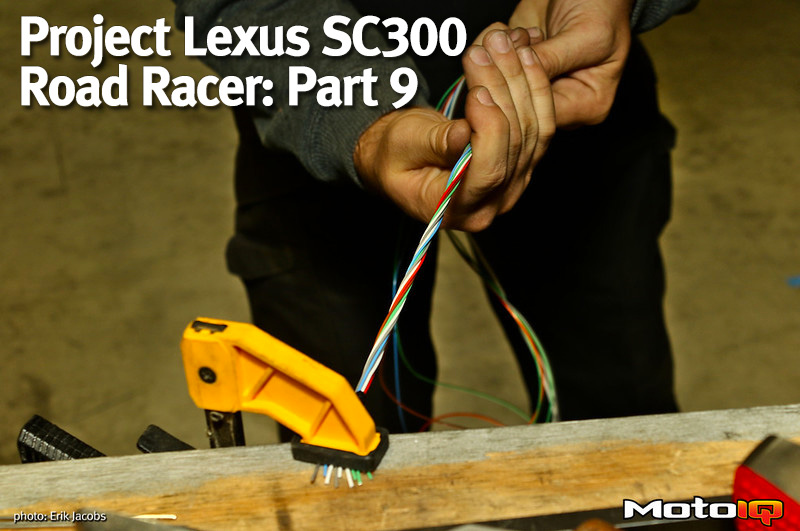
The first wire.

The time had come to for Tom to pull the first wire. But where do we go from here? And why did we make the plans that we did? We decided to start on the trunk harness because it was one of the simpler ones (or so we thought), and seemed like it would be a good warmup for the harder harness work. Let’s refer back to the plan, shall we?


The schematic for the trunk harness.

The trunk harness is not terribly complicated, but some very important things happen there. The list of circuits in the trunk includes:

  • High-pressure fuel pump
  • Low-pressure lift pump
  • Tail and brake lamps, blinkers, reverse lamps
  • Fuel level sensor and conditioner
  • Ground

Let’s take a moment to talk about ground, shall we?

If you ask some people, they might tell you that, in a car, ground means the battery negative terminal. They will say something like “if the wire doesn’t go all the way back to the battery negative, it’s not a good ground.”

This is nonsense. You should immediately stop listening to this person, with one exception — if your entire chassis is made of a nonconductive material (fiberglass, carbon fiber [ which technically can be conductive but anyway… ], plastic, wood, whatever). I digress.

SCIENCE BREAK

Almost all modern unibody vehicles are composed of aluminum and/or steel that is spot welded together in many places. Yes, aluminum and steel are not good conductors compared to copper wire. However, the ENTIRE CHASSIS of your vehicle is the conductor in this case, even if it is made of a poorly conducting material. That little wire running the length of your car back to the battery is not going to be much more conductive than the entire unibody once you get down to it. Using the chassis as ground is perfectly acceptable. But, that doesn’t mean that you can just go slap a ground connection anywhere you please.

Modern vehicles have tons of electronics in them. In fact, our Project SC300 uses a lot of them as you know from reading all of the wonderful articles that we wrote about it. All of these electronic devices are consuming varying amounts of power over time. These power fluctuations, the ignition system, the alternator and charging system, the radio transmissions, the CAN bus, and more all generate signals and electromagnetic fields that can be lump categorized as electrical noise. And, when you’re trying to precisely measure the location of spinny noisy engine bits and all manner of other things in a race car, noise is the enemy. So how does this relate to ground?

When you’re measuring something with a sensor, you are almost always ultimately measuring a voltage. Yes, certain sensors change resistance with the thing they’re measuring, but the change that your electrical device is observing is a change in voltage DUE to the change in resistance. There are exceptions to this, but for our purposes, let’s go with it.

If you remember basic early electrical stuff from high school, voltage is a form of potential energy. But that potential comes from somewhere — it’s referenced against something. That reference, in this automotive case, is ground. Technically chassis ground. And, technically it’s still the battery negative terminal, but you get the picture.

All of the noise in the automotive electrical environment can not only mess with your signals (which is why shielded wire is important in some cases), but can also disturb the actual ground level. Think of a perfectly calm lake surface that is then disturbed when your friend’s jet ski goes by. Ripples travel over the surface of the lake. What used to be a perfectly flat surface is now bumpy. That is what the electrical ground level in a car can look like over time when it’s very noisy.

Given that our sensors involve voltage measurements, and voltage itself is a measure referenced against ground, and noise actually changes the ground level, that means we can have a situation where the sensor value is fluctuating even if the actual thing being measured (eg: pressure) hasn’t changed! So what can we do to mitigate this noisy environment and try to improve the quality of our ground level?

If you look at the trunk harness design, you will see a ton of grounds, but they all terminate in one single location. We actually run a component’s ground wire back through the harness so that it exits at the same point with all the other grounds, and they all go into a single ring terminal and connect to the chassis at a single point.

By dropping all of the grounds at a single point, we help to reduce ground loops that can be introduced by having ground connections scattered everywhere around the area. Ground loops are when multiple electrical paths exist to reach the destination (ultimately the negative battery terminal), but the currents traveling along these different paths actually introduce more current flows because of electrical induction (magnetic field stuff).

So, before we fall off the electromagnetism deep end and start making weird left hand gestures at our desks to figure out which way currents are induced by fields (physics nerds will get that, everyone else can look it up), the too-long-didn’t-read summary for grounds is:

  • Chassis ground is fine.
  • Minimize the total number of ground connection points by “centralizing” them in each area of the car.

And, that’s why everything in the trunk is grounded to one point.

Next up, the fuel level conditioner.
Related

1 2 3 4 5 6 7 8 9Next page
Previous Article
  • Tech

Subaru Clutch Forks Cracking Under Pressure? Say It Isn’t So!

  • Jeff Naeyaert
View Post
Next Article
  • Uncategorized
  • Features

StopTech Brake Options for Early Porsche 911

  • Jeff Naeyaert
View Post

Leave a Reply Cancel reply

Your email address will not be published. Required fields are marked *

Input your search keywords and press Enter.