
,
 The first time you use a track it takes a little while to load.
I’m assuming that rFactor 2 is doing some pre-rendering of objects or something like that. I notice that the track loading takes a while if I alter the graphic quality settings, too. Other than the first time, this doesn’t take very long at all. I bet if my computer had SSD disks that this would be even faster.
 You start in the garage or pits.
When starting practicing at AMP you are in the garages area lined up with the other cars in the session (assuming you selected to have other cars on track with you). Every circuit has a different style of starting position. Sometimes, you’re actually inside a garage. Sometimes you’re in the paddock near a trailer. It all depends on who modeled the track.
From this home area, you can dive into some game settings but also dive into the tuning options for your vehicle of choice. Whenever you hit on your keyboard while driving, you are essentially taken back here (with some exceptions).
 Some cars don’t give you a lot of dials to turn.
In the case of a stock Corvette C6 Grand Sport, you don’t get a lot of dials to turn on the settings. This is representative of how the car is from the factory. You can do basic alignment and tire pressure adjustments, but spring rates, shocks, and other things are fixed to factory specs.
rFactor 2 isn’t a “game”, so you can’t “buy upgrades” for these cars to be able to mess with them. You would have to actually break open the models and files to change some of these things. Gran Turismo it ain’t…
 Hop in a Formula Renault 3.5 and you get more options.
As would be expected, on a fancy race car like a Formula Renault 3.5, you have quite a few options for adjusting settings. Double adjustable shocks, ride height, spring rates, roll bar stiffness, and more. It can be pretty daunting but, hey, so is real life.
And, if you have questions, head over to the various forums for input and advice. You’ll find a fellow friendly racer or two who might be willing to share a setup.
Also, as a quick aside, take a look at the realism of the cockpit down to the detail on the steering wheel.
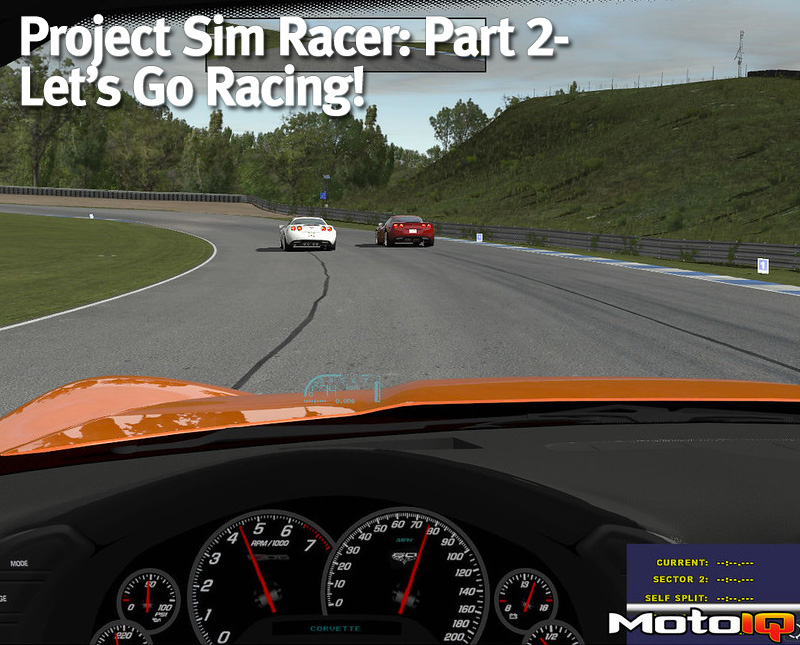
OK, so the Corvette is set to stock alignment, and we’re all ready to head out on track. Off we go.


1 comment
I completely relate to that feeling of the “addictive” nature of the iRating system. There’s something about that structured progression that makes you take every turn a little more seriously. I spent quite a while grinding through the rookie series myself, and the adrenaline rush when you finally secure that win—even if it’s thanks to others crashing out—is honestly hard to beat.
Beyond the software, I’ve found that my rig’s stability is just as critical for that immersion. When I first started getting serious, I didn’t realize how much a stable power supply or a high-quality power module https://serverorbit.com/power-supplies/power-module/power-accessories mattered. I used to get random disconnects during intense races, which turned out to be voltage fluctuations in my power strip. Once I upgraded to a more robust power delivery setup, I stopped worrying about the hardware failing mid-race and could finally focus on the driving. It’s funny how much we rely on clean power for these high-fidelity experiences.
Do you think the stress of competition in iRacing pushes the hardware to its absolute limit, or is the performance mostly dependent on having the right software tuning?