

Here you can see the plotted sensor life variance between the Bosch and FAE sensors. If anything the sensor life of the Bosch sensors, although much shorter was more consistent. If the one poorly performing FAE sensor was thrown out the FAE variability would tighten up considerably as shown here.

Statistically, from the sample size it can be shown that the FAE sensor’s life is much greater than the Bosch sensor.

In measuring the sensor’s response to transient conditions, an important factor when tuning, the change in AFR when the test engine’s throttle was blipped was recorded, and the sensor’s time to respond was logged. On average, the FAE sensors responded 5 milliseconds faster than the LSU sensor, a substantial 20% improvement.

From the sample size, there is a statistically very high probability that the FAE sensor is faster responding than the LMU sensor.

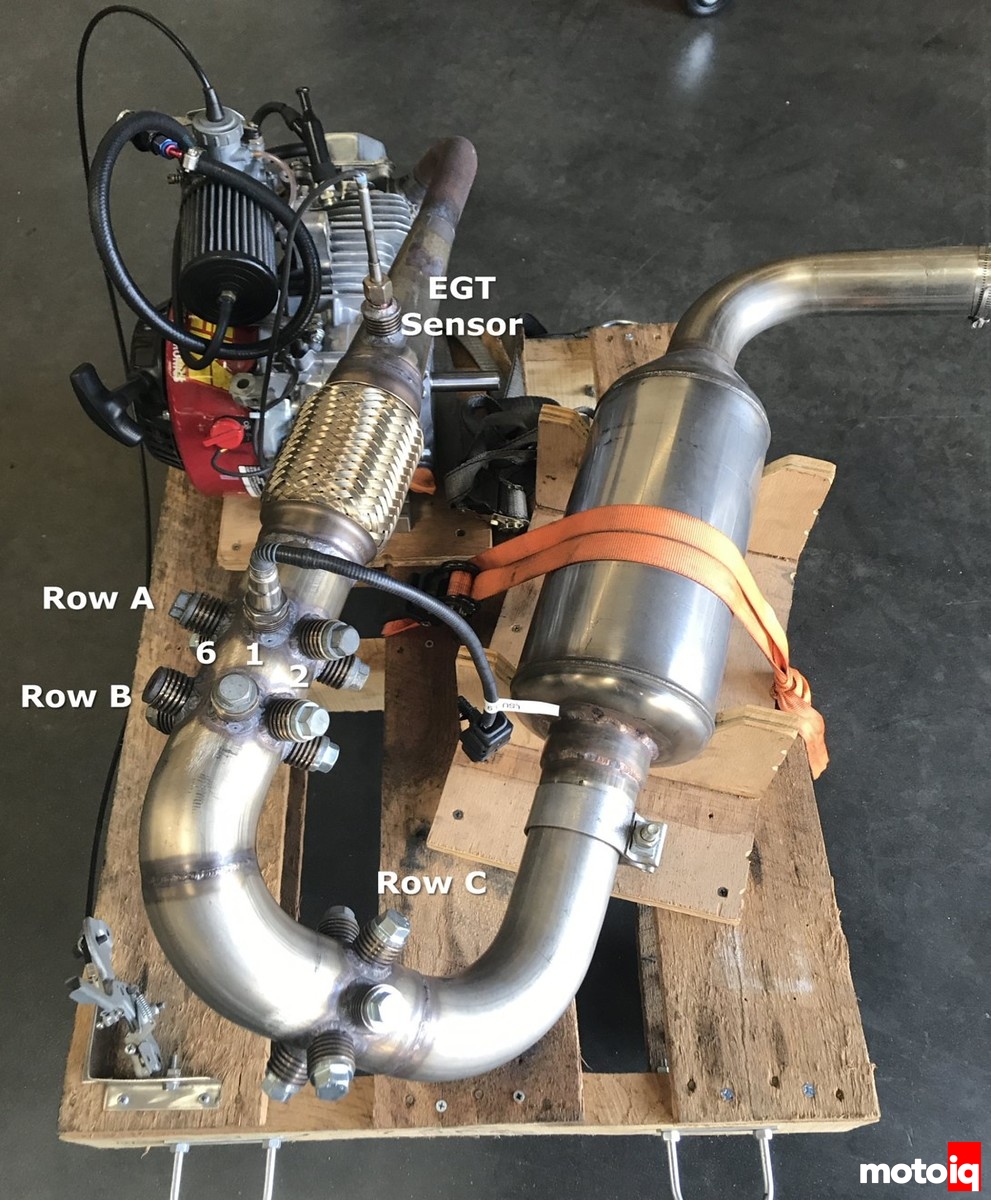
When measuring the sensor response time degradation over time, some of the Bosch sensors showed quite a bit of variance, and a significant number (4 out of 8) failed pretty quickly, within 10 hours. The longest any Bosch sensor lasted in this test was 25 hours and one sensor failed at 5 hours.

In response time testing, all of the FAE sensors lasted at least 25 hours, and 4 out of 10 were still working at the conclusion of the test at 70 hours. At 25 hours the sensor’s response time was still pretty consistent and all of the sensors had a quicker response than the best of Bosch up to 10 hours of use.
By examining the test data, it is a safe conclusion that the FAE sensor is a significant step forward in sensor durability, robustness, and speed while maintaining a consumer-friendly price point. We think AEM Electronics did a great job in bringing this sensor technology to the market.
By the time you read this, the FAE sensor will have been incorporated into the Wide Band Air Fuel Ratio gauge, and soon, it will be used across the AEM Electronics product lineup.

1 comment
Oh interesting; I know how fiddly component level testing can get, but that looks like a reasonable test setup for what they’re validating there. I wonder about high EGT lifespan but that’s my rotary emphasis. Great to see more options than just the Bosch standbys!