
To control our 3 radiator fans and 2 fuel pumps (lift pump and main pump), we turned to Kaizen Speed for their amazing solid-state relays. Their modular, weatherproof, solid-state relays directly replace standard relays and can be triggered with a power or ground signal. The ability to connect and snap the relays together while they remain connected to wiring is patent-pending and 100% unique to their clean-sheet design.
The interlocking side ports also allow for up to three relays to be connected on the same power rail, so one power supply can power up to three connected relays at the same time. An optional CAN enabled module can also attach directly to the side of the relay and can pulse or trigger the relay based on CAN messages. Two LED lights on the module identify when the relay is active, and a central button allows for manual activation of the relay. I really like this feature, which makes diagnosis of fuel pumps and radiator fans quick and easy from under the hood of the car.
Kaizen Speed was founded in 2003 by Reid Lunde, who started the company out of a bedroom making a balance shaft eliminator kit for the Honda H22. The company has grown over the past two decades into a full performance shop in Richland, Washington with its own chassis dyno, and in 2017 shifting focus to product development. That work paid off when the Kaizen Relay concept won the SEMA Launch Pad competition in 2019. In other words, these relays were designed by people who have spent 20+ years building and tuning cars.
Kaizen Speed is now The Northwest’s Most Experienced Late Model GM Shop specializing in Cadillac, Camaro, and Corvette platforms. Their newest product is the KBoost, a sophisticated supercharger bypass valve controller and actuator, designed to give high-horsepower supercharged vehicles more precise control over boost delivery. Boost can be adjusted by wheel speed, gear, and time to tune the power delivery so the car can put down the maximum power for each scenario. Kaizen Speed has helped everything from Corvettes, Hellcats, CTS-Vs, Mustangs, and F150s put down significant power at the strip and optimize their times.

Compared to typical relay/fuse boxes designed for fuel pump upgrades, the Kaizen Speed Relays have both a positive and a negative trigger pin, so we can switch it with either a high-side or low-side ECU output. This is important with aftermarket ECUs like the Haltech Elite, which trigger a constant-powered relay with a low-side output, but the ECU’s pulldown resistor can turn the relay on when the ECU shuts off. With the Kaizen Speed Relay, setting the ECU output to a high-side trigger and installing the signal wire to the positive pin of the relay, avoids this problem.

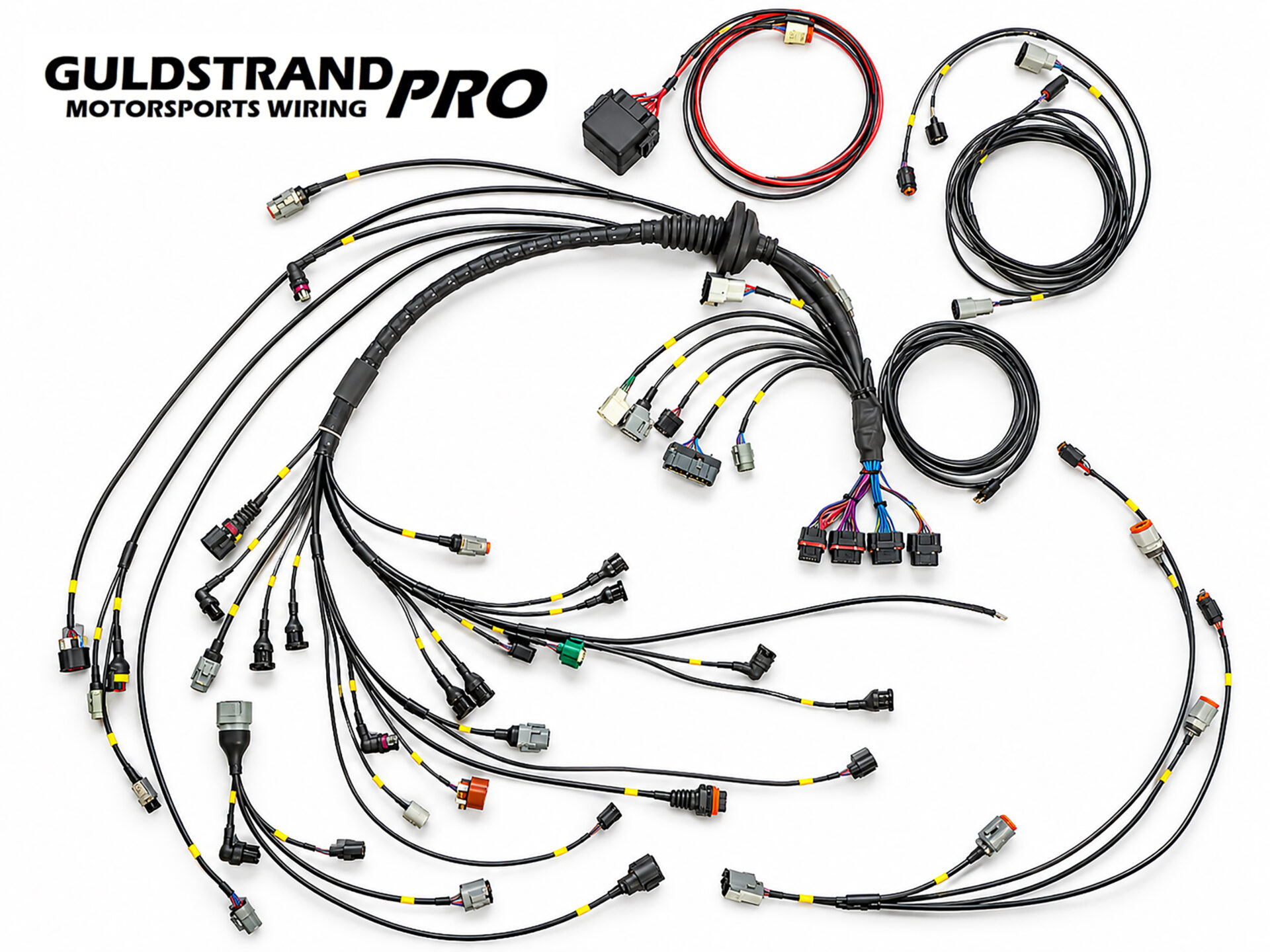
We 3D printed a bracket to bolt the Kaizen Speed relays to the car, and wired the ECU to send fan control signals through the factory wiring harness on the original coil pack signal wires. Cody of Guldstrand Pro Wiring is a wizard at finding OEM connectors and we wired up a new coil pack signal connector to our Kaizen relays.

With the Kaizen Speed Relays mounted and wired up, the fans were ready to go. A main 8AWG power wire runs from the fuse box powers the center Kaizen relay, which internally feeds the two outer relays. Right now, we are only using 2 fans, and the 10AWG wire goes from the relay to power the fans. The 3 signal wires from the factory harness quickly and easily connect into the Kaizen relays.

In the trunk of the car in the left hatch opening, we mounted two more Kaizen Speed Relays and ran a 8AWG wire from the battery directly to the relay. 10AWG wires connect the relay to the lift pump and main pump, while a bundle of signal wires come from the ECU to control the pumps. We have a few additional signal wires to prepare for PWM control of a brushless pump in the future.

We replaced the factory fuel hat connectors with a 6-pin Deutsch connector that houses the main pump and lift pump power and ground wires, as well as the fuel level signal wires. With the fuel pump wired, the entire electrical system of our car was complete and ready to fire up the engine.
OVERVIEW
I was extremely happy with how well this wiring harness turned out. Cody Guldstrand at Guldstrand Pro Wiring Harnesses really taught me a lot and showed me all of the steps necessary to properly document and build a top-notch motorsport wiring harness. This entire process was extremely time consuming and there were so many little tricks and details that takes years of building harnesses to learn, as well as countless little tricks that greatly improved the efficiency of creating the harness. The Kaizen Speed Relays are awesome and really open up the packaging options and build ideas of various systems in the car.
It was truly eye-opening to go through this entire process and I am very grateful for everything that Cody has taught me. I am extremely proud of building this harness with Cody’s guidance but it was A LOT of work. In the future, I will be leaving the wire harness building to the experts at Guldstrand Pro.