
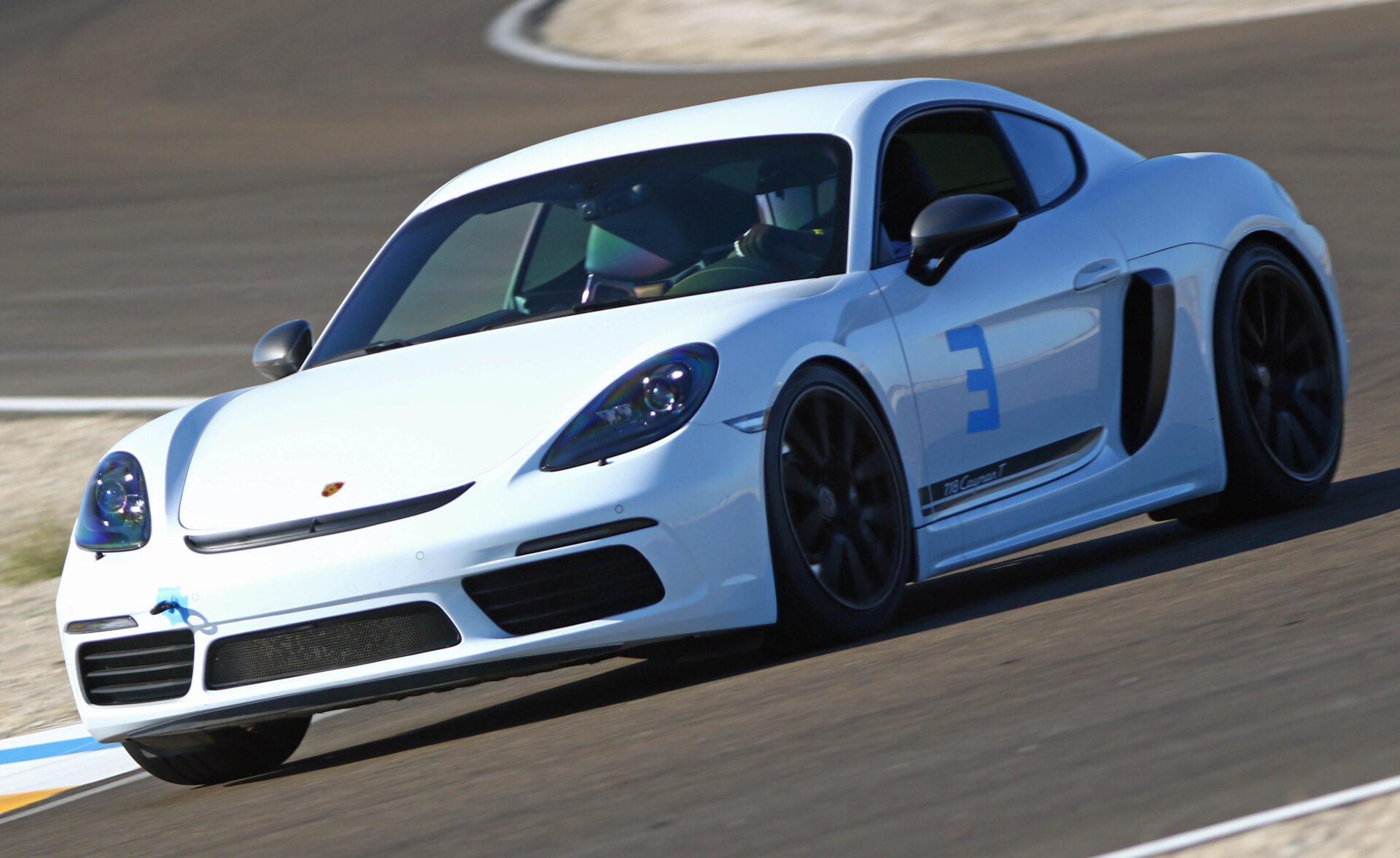

I did the usual Motul 300V oil change and Motul RBF600 brake fluid flush in prep for the track day. I also topped off the coolant. I had been topping off the system with distilled water up to this point, so I figured it was time to add back in some coolant to keep the water to glycol ratio in check. I’ve noticed that I need to top off the coolant every half year or so and there’s some crusty coolant residue around the fill cap. Maybe the pressure rating on my cap isn’t up to spec. Anyway, keep an eye on your coolant level on these cars with the turbo engines.

Ambient air temps were in the 85F-90F range, so I put in some of the VP Racing 101 octane unleaded juice. Sustained track use is completely different than street use and I found I needed about 2/3 of a tank of 101 octane with the rest being Chevron 91 octane to keep from getting RON correction from excessive timing correction. And that was with the water injection going. On the street, even with some canyon driving, I don’t ever get RON correction on straight 91 octane from Shell. If I didn’t put in 101 octane at the track, the car would just derate itself by setting a lower torque target. When I first got this car, I was using Race Gas Concentrate which worked very well. However, I just don’t know the long-term impacts of the additives in the Race Gas Concentrate on the O2 sensors, spark plugs, and catalytic converter, so I opted to spend more on the 101 octane unleaded gas this time.

After a couple of sessions, I settled on putting max water injection at 2.0 bar of pressure. My actual peak boost pressure while driving was around 1.7 bar.

This is a datalog from one of my sessions. You can see the RON adjustment got triggered a bit due to high levels of Ignition Timing Correction. My Intake Air Temps were about 40F-50F above ambient (IAT dT), which is down significantly from being 60F-70F above ambient observed during prior track days. The water injection is responsible for that temperature decrease.

My buddy David took the car out for a spin. For his session, I had dumped in a bit more 101 octane and you can see there was nearly zero RON correction. When you compare the Intake Air Temp plot vs the Torque Set Point plot, you can see how the target torque set point is reduced as the intake air temp increases. With the IAT in the 110F range, the target torque was upwards of 340 lb-ft. As IAT increased to 140F, the torque dropped down to around 300-310 lb-ft.

5 comments
Looking at stuff, I would say you need more roll stiffness, more negative camber, and less front caster.
I got shims from E-Motion to adjust the caster and camber. I just need to find time to adjust the alignment before my next track day. For more roll stiffness… I’ve been thinking about it for a while already. Commonly used is the Tractive setup, but Nitron released their new setup compatible with PASM/DSC. Looking at spring rates in the GT4 territory to keep that balance of streetability.
Can you please expand on the less front caster comment as it pertains to the 718 chassis? Is there a reason you suggest he might have too much and what would be a good target caster for a mixed use street/track 718?
It seems that it is common to end with 9 or 9.5 degrees caster on these cars.
Has anyone gotten these plugs yet? Seem like a decent upgrade.
Ruthenium HX is available in two designs to best maximize the performance of your engine.
DFE (double fine electrode) maximizes ignitability, while reducing emissions for low-heat engines. This NGK-patented design is recommended for non-turbo applications.
PSPE® (projected square platinum electrode) provides the best ignitability and service life for high-heat engines. This NGK-patented design is recommended for turbo and supercharged engines.
https://ngksparkplugs.com/en/products/ignition-parts/spark-plugs/ruthenium-spark-plugs
Interesting. I haven’t kept tabs on spark plug tech. The boring part of sticking with OEM plugs is that they are pre-gapped, ha.