

With my 2.0 bar setting for maximum injection and a peak actual boost of about 1.7 bar, I estimated to be spraying about 94 mL/min. I estimated that would reduce the air temperature coming out of the compressor by about 24F. The temperature reduction at the intake manifold was in the ballpark of 20F, so the math checks out. My actual rate of water consumption during track use was very roughly half a gallon in twenty minutes, so that math checks out too.

60C is 140F, and even with my higher water injection rate for the track, I’ve calculated I’m only increasing the relative humidity of the air about 10 points. The mass of water compared to fuel injected is about 6%. At this rate of water injection, I didn’t data log any odd behaviors, so I’ll increase the rate next time as I know how quickly I’m draining the tank.

The drop in engine speed to idle while David was driving was due to this car going for a spin. Anyway, David ripped around in the car around Buttonwillow faster than I was going.

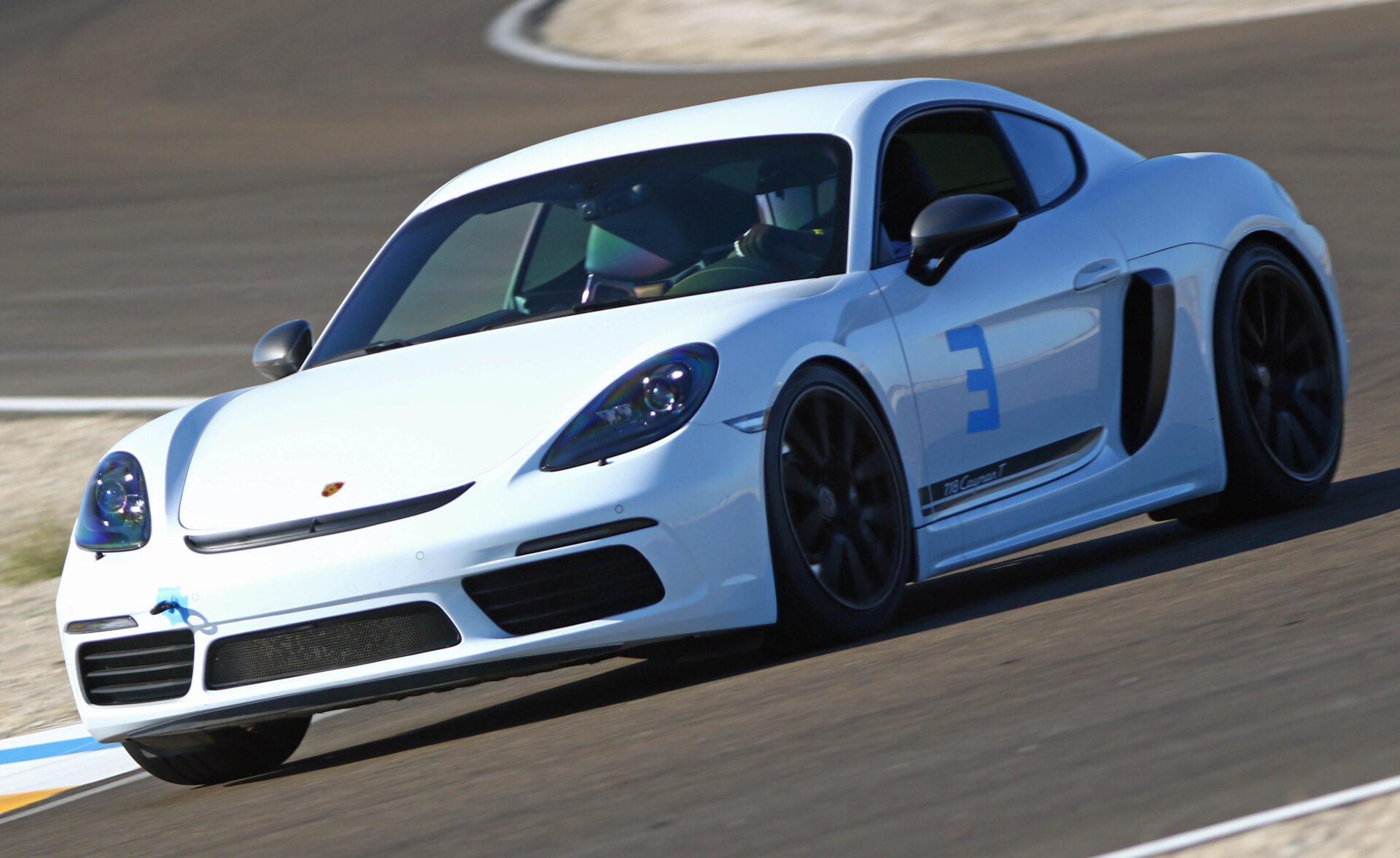
So, how did the new 19” wheel and tire package with Titan-7 T-P5 wheels and Bridgestone Potenza RE-17RS tires do? I got the car loaded up pretty well going through the corner Sunset at Buttonwillow. You can see the tire is tucked up a bit into the fender and there were no rubs against the fender! The first session out on the tires was during the first session of the day at the Circuit and the tires felt a bit odd like they were graining a bit; that’s the best I can describe sensation. The track was very very dusty the first couple of laps. A literal cloud of dust was kicked up by the cars. By the second session though, everything felt fine.

The shoulders on the front tires were showing a bit of excessive wear. I was starting with tire pressures around 1.7-1.8 bar cold according to the dash gauge. The grip was pretty good up to 2.1 bar hot. When the tire pressures crept up to 2.2 bar, the grip definitely fell off. This would be about fifteen minutes into a session. I should probably start at a little bit lower cold pressure.

5 comments
Looking at stuff, I would say you need more roll stiffness, more negative camber, and less front caster.
I got shims from E-Motion to adjust the caster and camber. I just need to find time to adjust the alignment before my next track day. For more roll stiffness… I’ve been thinking about it for a while already. Commonly used is the Tractive setup, but Nitron released their new setup compatible with PASM/DSC. Looking at spring rates in the GT4 territory to keep that balance of streetability.
Can you please expand on the less front caster comment as it pertains to the 718 chassis? Is there a reason you suggest he might have too much and what would be a good target caster for a mixed use street/track 718?
It seems that it is common to end with 9 or 9.5 degrees caster on these cars.
Has anyone gotten these plugs yet? Seem like a decent upgrade.
Ruthenium HX is available in two designs to best maximize the performance of your engine.
DFE (double fine electrode) maximizes ignitability, while reducing emissions for low-heat engines. This NGK-patented design is recommended for non-turbo applications.
PSPE® (projected square platinum electrode) provides the best ignitability and service life for high-heat engines. This NGK-patented design is recommended for turbo and supercharged engines.
https://ngksparkplugs.com/en/products/ignition-parts/spark-plugs/ruthenium-spark-plugs
Interesting. I haven’t kept tabs on spark plug tech. The boring part of sticking with OEM plugs is that they are pre-gapped, ha.